
October 1, 2026
Travelling Abroad with Children: Your Essential Guide to Passports, Visas and Travel Documents
Travelling overseas with children can be an unforgettable experience, offering opportunities to explore new destinations, discover different cultures and create memories that will last a lifetime. However, before you start dreaming about tropical beaches, exciting city breaks or unforgettable African adventures, there's one important thing to take care of: your travel documentation. Travelling internationally with children requires a little more preparation than travelling alone. From ensuring that every child has a valid passport to understanding parental consent requirements, obtaining visas and arranging any necessary vaccinations, there are several important details to consider before departure. For South African parents, understanding the documentation required when travelling with minors is particularly important. Missing paperwork or an expired passport can cause unnecessary delays at the airport and, in some cases, prevent your family from travelling altogether. Whether you're planning a family holiday to Europe, a tropical escape to Mauritius, an adventure in Southeast Asia or a trip to visit relatives overseas, this comprehensive guide will help you prepare for a smooth and stress-free journey. Here's everything you need to know about travelling abroad with children from South Africa.
Passports: Every Child Needs Their Own
Before booking your flights or finalising your accommodation, check that every family member has a valid passport. South African children, including infants and newborn babies, must have their own passports when travelling internationally. Children cannot travel on their parents' passports. One important detail that parents often overlook is that children's passports are generally valid for five years, rather than the ten years applicable to adult passports. If your child already has a passport, check its expiry date well in advance of your departure. Even if the passport is still valid on the day you leave South Africa, it may not meet the entry requirements of your destination.
How much passport validity does your child need? Many international destinations require passports to remain valid for at least six months beyond the intended date of travel. However, this is not a universal rule. Requirements differ between countries, and some destinations require only three months of remaining validity or apply different rules altogether. Always check the passport requirements of your destination and any countries where you will be transiting. It is also worth checking that your child's passport has sufficient blank pages for any required entry and exit stamps or visas. Travel tip: Don't wait until a few weeks before departure to renew your child's passport. Allow plenty of time for the application process, particularly during busy holiday periods. You can find passport application information through the South African Department of Home Affairs.
Birth Certificates and Proof of Parentage
One of the most frequently asked questions about travelling internationally with children from South Africa concerns birth certificates. Historically, South African immigration requirements have placed considerable emphasis on unabridged birth certificates, which record the details of a child's parents. However, the current requirements make an important distinction. South African children travelling on South African passports that contain their parents' particulars do not need to carry a separate birth certificate for South African immigration purposes. Where the passport does not contain these details, a birth certificate or equivalent document may be required. For families travelling with children who hold foreign passports, the requirements may differ depending on their nationality and circumstances.
Should you still carry your child's birth certificate? Even where a birth certificate is not a compulsory document for your particular journey, carrying one can be useful. Airlines, immigration officials in other countries and authorities dealing with unusual travel circumstances may request additional documentation to establish a child's identity or relationship to the accompanying adult. If you are travelling with children who have different surnames from you, supporting documents establishing your relationship may also help prevent unnecessary questions. For this reason, we recommend checking the requirements of your airline and destination and carrying appropriate supporting documents. If you need to apply for a birth certificate, allow sufficient time for the application. Processing times can vary, so it is best to make enquiries with Home Affairs as early as possible.
Travelling with Only One Parent? Here's What You Need to Know
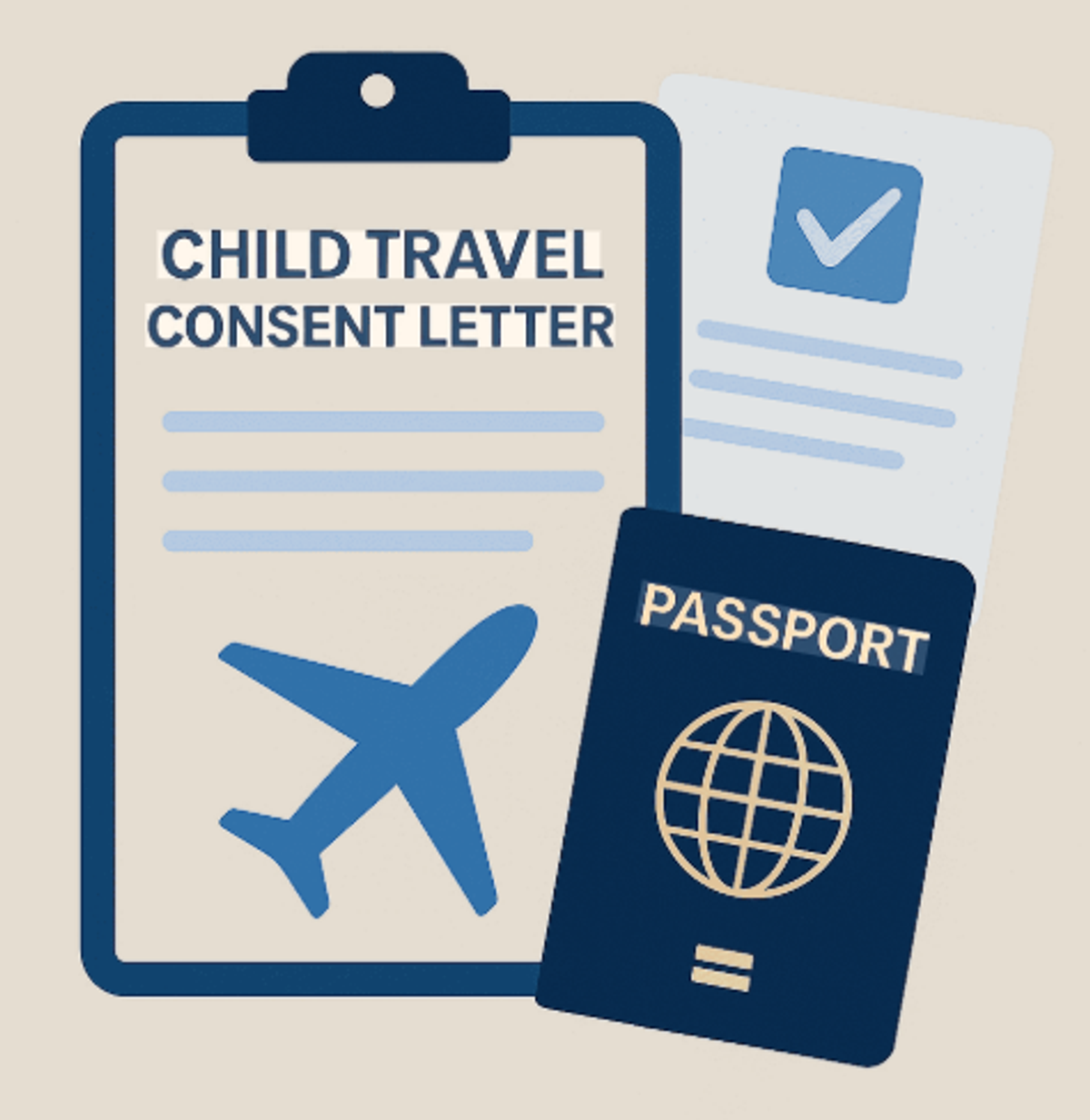
Travelling internationally with your children without the other parent requires additional preparation. South African immigration regulations include specific provisions for children travelling with only one parent. These requirements are designed to safeguard children and help prevent child trafficking and unlawful international removals. Depending on your circumstances, you may need to present the following documentation: Your child's valid passport. A birth certificate or equivalent document, where required. A parental consent affidavit from the non-travelling parent, where applicable. A copy of the non-travelling parent's identity document or passport. The non-travelling parent's contact details. A parental consent affidavit should clearly state that the non-travelling parent gives permission for the child to travel with the accompanying parent. It should include the child's details, the accompanying parent's details and relevant travel information. Although the South African regulations allow for parental consent affidavits, the destination country or airline may have additional requirements. It is therefore advisable to check these before departure.
What if the other parent cannot travel or provide consent? There are circumstances in which a parental consent affidavit may not be necessary or may be replaced by other documentation. Depending on the legal circumstances, acceptable supporting documents may include: A court order granting the travelling parent full parental responsibilities and rights or sole legal guardianship. A court order specifically authorising the child's international travel. The death certificate of the other parent, where applicable. If the parents are divorced or separated, it is particularly important to check the terms of any existing custody or parental responsibility arrangements. Where parental consent is required, do not assume that being the child's primary caregiver automatically removes the need for consent from the other parent. Travel tip: If you are travelling as a single parent, begin checking your documentation well before your departure date. Resolving consent issues can take time, particularly when court orders or additional legal documentation are involved.
Children Travelling with Grandparents, Relatives or Other Adults
Are the children travelling with their grandparents, an aunt or uncle, a family friend or a school group instead of their parents? Additional documentation may be required. South African immigration regulations provide for children travelling with adults who are not their biological parents. Depending on the circumstances, the accompanying adult may need to carry: The child's valid passport. A birth certificate or equivalent document, where required. An affidavit or other written parental consent confirming permission to travel. Copies of the parents' or legal guardians' identity documents or passports. Contact details for the parents or legal guardians. If your child is travelling with a school group, the school should confirm which documents are required and whether any special arrangements apply. For children travelling alone, additional documentation and airline-specific unaccompanied-minor procedures may apply. These should be arranged well in advance. Important: Never assume that a child can travel internationally with another adult simply because they have the same surname or are accompanied by a close relative. Always confirm the documentation required for the specific journey.
Visas: Children Need Them Too!
One of the most important things to remember when planning an international family holiday is that children are subject to visa requirements just like adults. If you need a visa to enter your destination, your children may need one too, even if they are infants or very young. Visa requirements depend on your nationality, destination, length of stay and purpose of travel. For example, South African passport holders travelling to countries in the Schengen Area, the United Kingdom or the United States generally need to arrange the relevant visas for their children as well as themselves. Each destination has its own application process, documentation requirements and processing times.

Applying for children's visas
Depending on the destination, you may need to provide: - A valid passport for each child. - Completed visa application forms. - Recent passport photographs. - Birth certificates or other proof of parentage. - Copies of the parents' passports or identity documents. - Parental consent documentation, where applicable. - Proof of accommodation and travel arrangements. - Evidence of sufficient financial means, where required. Some countries require children to attend visa appointments in person, while others have different procedures for minors. Visa processing times can vary considerably, particularly during peak travel periods. Some applications may take several weeks or longer, so it is important to begin the process as soon as you have confirmed your travel plans. Always consult the official embassy, consulate or authorised visa application centre for the latest requirements. Travel tip: Don't leave visa applications until the last minute. Ideally, start researching the process as soon as you begin planning your holiday.

Health and Vaccinations: Prepare Before You Travel
Your family's health is just as important as having the correct travel documents. Depending on your destination, your children may require specific vaccinations or preventive medication before travelling. This is particularly important when visiting countries where malaria, yellow fever or other infectious diseases are prevalent. When should you visit a travel clinic? Ideally, arrange a consultation with a travel health professional approximately four to six weeks before departure. This allows sufficient time to review your children's existing vaccinations, administer any additional vaccines and discuss preventive medication where necessary. Some vaccinations require multiple doses or a waiting period before they provide protection, making early planning essential. Yellow fever requirements Certain countries require travellers arriving from South Africa or other designated countries to present a valid yellow fever vaccination certificate. Requirements depend on the destination and your travel itinerary, including any countries you may have visited or transited through. If your itinerary includes a country with yellow fever vaccination requirements, check the official entry regulations well before departure. Children's eligibility for vaccinations and any applicable age-related exemptions should be discussed with a qualified healthcare professional. Malaria prevention If you're travelling to a malaria-risk destination, consult a travel clinic or healthcare professional about suitable precautions for your children. Depending on the destination and your child's age, this may include preventive medication, insect repellent, protective clothing and mosquito nets. Not all malaria medication is suitable for every child, so always obtain professional advice before administering it. Don't forget travel insurance Medical expenses abroad can be substantial, particularly if a child requires emergency treatment or hospitalisation. Comprehensive family travel insurance can provide valuable financial protection against unexpected medical expenses, cancellations, delays and other covered travel disruptions. Before purchasing a policy, check that it covers every family member, including infants, and review any exclusions or limitations.
Airline Requirements When Travelling with Children
Even if your family has all the necessary passports and visas, it is important to familiarise yourself with your airline's specific requirements. Airlines may have additional procedures for families travelling with infants, young children or minors who are not accompanied by both parents. Depending on the airline, you may need to provide additional documentation or make special arrangements before departure. If your child is travelling alone, check whether the airline offers an unaccompanied-minor service and whether it is compulsory for your child's age group. You should also confirm the airline's policies regarding: Infant and child seating arrangements. Baggage allowances for children. Travel with prams and car seats. Special assistance for families. Documentation for minors travelling with one parent or another adult. If you are travelling with a connecting flight, check the requirements of every airline operating your journey. A little preparation can help make the airport experience considerably easier, particularly when travelling with younger children.

Your Essential International Family Travel Checklist
With so many details to consider, having a checklist can make preparing for your family holiday much easier. Before leaving South Africa, make sure you have reviewed the following:
Passports - Every child has their own valid passport. - Passports meet the validity requirements of every destination. - There are sufficient blank pages for visas and immigration stamps.
Birth Certificates and Parental Consent - You have checked whether your child's birth certificate is required. - You have obtained any necessary parental consent affidavits. - You have copies of the relevant parents' identity documents or passports. - You have the appropriate court orders or death certificates, if applicable. - You have supporting documentation if your surname differs from your child's.
Visas - Every family member has the required visa or travel authorisation. - Visa applications have been submitted well in advance. - You have checked whether children need to attend visa appointments.
Health and Travel Insurance - You have consulted a travel clinic if necessary. - Your children's routine vaccinations are up to date. - You have arranged any destination-specific vaccinations. - You have arranged any destination-specific preventive medication. - Your family has suitable travel insurance.
Flights and Accommodation - Your flight bookings have been confirmed. - You have checked your airline's requirements for travelling with children. - Your accommodation is suitable for your family's needs. - You have arranged any necessary airport transfers or child seats.
Before Departure - You have digital and physical copies of important travel documents. - You have checked the latest entry requirements for your destination. - You have reviewed any transit-country requirements. - You have completed the applicable South African traveller declaration.
Don't forget South Africa's online traveller declaration
Since 1 July 2026, travellers entering or leaving South Africa are required to submit an online traveller declaration under the South African Traveller Management System. This includes children, although a parent or legal guardian can complete the declaration on their behalf. The declaration must generally be submitted no more than 24 hours before departure from the country of travel. It covers customs-related information, including goods and currency. Make sure you understand the requirements before leaving home, particularly if you are travelling with several family members. You can find more information through the official SARS Traveller Declaration portal, or on our useful guide to the SARS declaration process Since 1 July 2026, travellers entering or leaving South Africa are required to submit an online traveller declaration under the South African Traveller Management System. This includes children, although a parent or legal guardian can complete the declaration on their behalf. The declaration must generally be submitted no more than 24 hours before departure from the country of travel. It covers customs-related information, including goods and currency. Make sure you understand the requirements before leaving home, particularly if you are travelling with several family members. You can find more information through the official SARS Traveller Declaration portal.

How to Make Travelling Abroad with Children Less Stressful
Travelling with children should be an enjoyable experience, not a source of unnecessary stress. While documentation and travel arrangements require careful planning, there are several ways to make the process easier. Start planning early. Give yourself plenty of time to arrange passports, visas, vaccinations and any additional documentation. This is particularly important when travelling during school holidays or other busy periods. Keep your documents organised. Store passports, birth certificates, consent affidavits, visas and flight confirmations together in a secure travel folder. Keep digital copies in a secure location as a backup. Check every destination. If your itinerary includes multiple countries, make sure you understand the entry requirements for each one, including any transit destinations. Choose family-friendly accommodation. Look for hotels and resorts that cater to families, with suitable room configurations, convenient facilities and activities for children. Allow extra time at the airport. Travelling with children can take longer, especially when checking in, going through security and boarding. Arriving early gives you more time to manage unexpected delays. Consider using a travel professional. A knowledgeable travel consultant can help you coordinate flights, accommodation, transfers and other arrangements, leaving you more time to focus on your family.
Make Your Next Family Holiday a Breeze with Travel Vogue
A family holiday should be about spending quality time together, exploring new destinations and making memories that will last a lifetime. Although international travel with children requires a little extra preparation, having the correct documentation and making arrangements well in advance can help you avoid unnecessary complications. From choosing the perfect family-friendly resort to arranging flights and transfers, Travel Vogue is here to help you plan a holiday that suits your family's needs. Let us take care of the travel details while you focus on what matters most: enjoying every moment of your family adventure. Contact Travel Vogue today and let us help you plan your next unforgettable family holiday. Visit travelvogue.co.za or email tanya@travelvogue.co.za or emma@travelvogue.co.za to start planning your dream vacation today!

Inspired to Travel?
Let our expert consultants help you plan your perfect journey to any of these incredible destinations.
Start Planning